How to Book the Choquequirao Trek 4 Days
Booking with Machu Picchu Team is straightforward and secure, whether you do it online from anywhere in the world or in person at our Cusco office. Reserve early where you can, particularly in the busy trekking months. Group departures depend on availability and confirmation, and where no group exists for your date we can often arrange a private departure from two travelers upward.
Booking online
- Press BOOK NOW to open the availability calendar.
- Choose your departure date and the number of travelers.
- Enter the details for each participant: full name, nationality, passport data, date of birth, email, WhatsApp number, dietary requirements, relevant medical information and where you are staying in Cusco.
- Decide whether to pay the deposit or the full price.
- Pay by debit or credit card. A 3.99% online processing fee applies.
- You receive your payment receipt by email automatically.
- Our reservations team verifies everything and sends your final confirmation, the briefing details, the packing list, your pick-up information and anything else you need before departure.
Online reservations depend on the availability of guides, transport, guesthouses, pack horses, muleteers, cooks, entrance tickets and the rest of the operational chain. For last-minute bookings, contact us before paying so we can confirm that every service is genuinely available for your date.
Confirmed group departures
A date showing as available on the calendar normally means a group has been confirmed or that spaces remain on one. Solo travelers, couples, families and groups of friends can all join. We keep group sizes limited, which makes for better organization and closer attention on the trail. New groups also form at short notice, so if your preferred date is not listed, write to us anyway — availability changes from one day to the next.
Private departures
Where no group exists for your date, or you would simply rather not share the trek, we can run it privately from two travelers upward. The price depends on group size, since the transport, guide, cook, muleteers, pack horses, meals, accommodation and logistics are arranged for your party alone. Because we operate this trek ourselves rather than reselling it, we have the staff, equipment and transport to put departures together on flexible dates when operations allow. Send us your preferred date and the number of travelers and we will quote it.
Booking at our Cusco office
You can also reserve in person at Portal Nuevo 270, Plaza Regocijo, one block from the Plaza de Armas. Our staff will go through the itinerary, the daily distances, the difficulty, the accommodation, meals, luggage and pack-horse arrangements, what is and is not included, payment conditions and how to prepare.
Accepted at the office:
- Cash in Peruvian soles or US dollars
- Debit or credit card, with the 3.99% processing fee
- Bank transfer, arranged in advance
What we need from you
Complete and accurate details for every traveler: full name exactly as printed on the passport, passport or ID number, nationality, date of birth, email, WhatsApp number with country code, your accommodation in Cusco, dietary restrictions or food allergies, any relevant medical conditions and an emergency contact. The passport data is what allows us to arrange entrance tickets and trekking services; your contact and hotel details are what let us coordinate the briefing and the pick-up.
Pre-trek briefing
Attendance is required. We meet at 6:00 p.m. the day before departure at our Cusco office, where your guide covers the full itinerary, the trail and weather conditions, packing recommendations and your questions, and confirms the hotel pick-up time. You also collect your duffel bag here — up to 7 kg, carried by pack horses throughout the trek.
Changes, Cancellations and Refunds
Changing your date
Request a change as early as you can, by email or WhatsApp. Rescheduling depends on the availability of guides, private transport, guesthouses, cooks, muleteers, pack horses, entrance tickets and confirmed group departures. Services already booked or paid to local suppliers may not be recoverable, and any extra cost caused by the change — new tickets, accommodation, transport or staffing — is the traveler’s to cover.
Write to machupicchureservations@gmail.com or message +51 974 217 700.
If you cancel
A non-refundable deposit of USD 180 per person confirms the reservation. Cancel more than 48 hours before departure and we deduct the deposit plus the cost of any services already confirmed or paid to local suppliers; whatever remains eligible can be refunded. Cancel within 48 hours of departure and no refund is possible. Missing the arranged pick-up, arriving too late to start, or not travelling on the confirmed date counts as a no-show — no refund, no credit, no rescheduling. Card processing fees, bank charges, exchange differences and money already paid to guides, cooks, muleteers, guesthouses, transport providers and site administrators are non-refundable in every case.
If we cancel or change the trek
We may modify, postpone or cancel the itinerary when conditions make the route unsafe or impossible to run: severe weather, landslides, road closures, trail damage, flooding, fires, strikes, social unrest, government restrictions, medical emergencies or anything else outside our control. Where we can, we will offer one of the following:
- A new departure date
- A modified itinerary
- An alternative route or activity of comparable value
- A refund for services not provided and still recoverable from local suppliers
Refunds cannot be promised for services already used, reserved, paid for or declared non-refundable by third-party providers.
Read this before you book
Choquequirao involves long climbs, steep descents, real heat inside the Apurímac Canyon and several demanding days on foot. Go through the itinerary, the difficulty rating, the physical requirements and the packing list properly before you commit — this is not a trek that rewards optimism about fitness. Travel insurance covering trekking, medical emergencies, evacuation, cancellation and travel delays is strongly recommended.
Choquequirao Trek 4 Days — Frequently Asked Questions
Is Choquequirao harder than Machu Picchu?
Considerably, yes. This is among the most demanding treks in Peru. Each day involves elevation changes of 1,200 to 1,500 m on steep, narrow trails, and there is no train and no shortcut to fall back on — the round trip from Cachora runs roughly 60 km over four days.
That difficulty is also the reason it is worth doing. Around 30 people a day reach Choquequirao, against thousands at Machu Picchu. You get an Inca citadel of comparable ambition almost to yourself.
How do you actually get there?
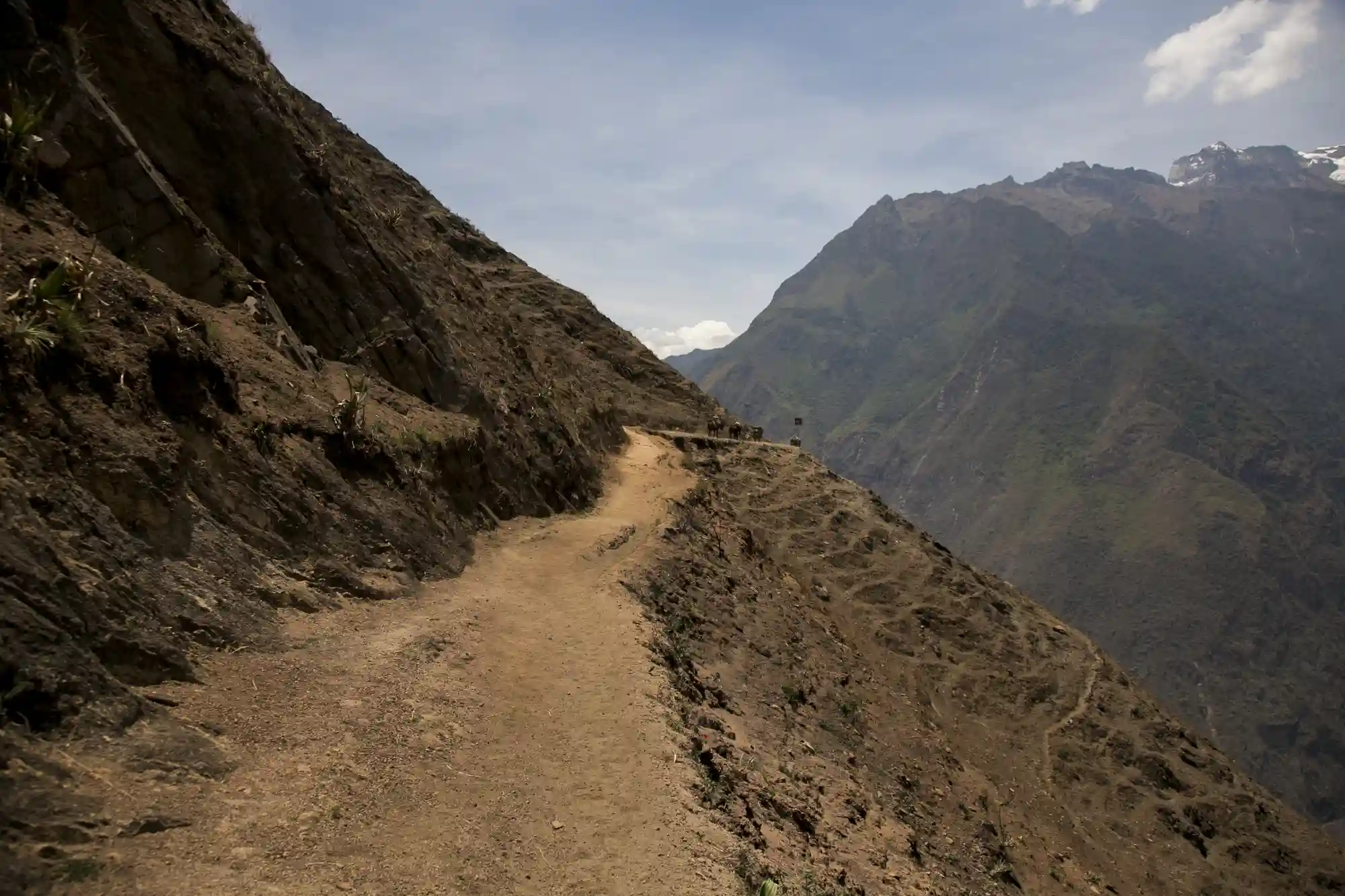
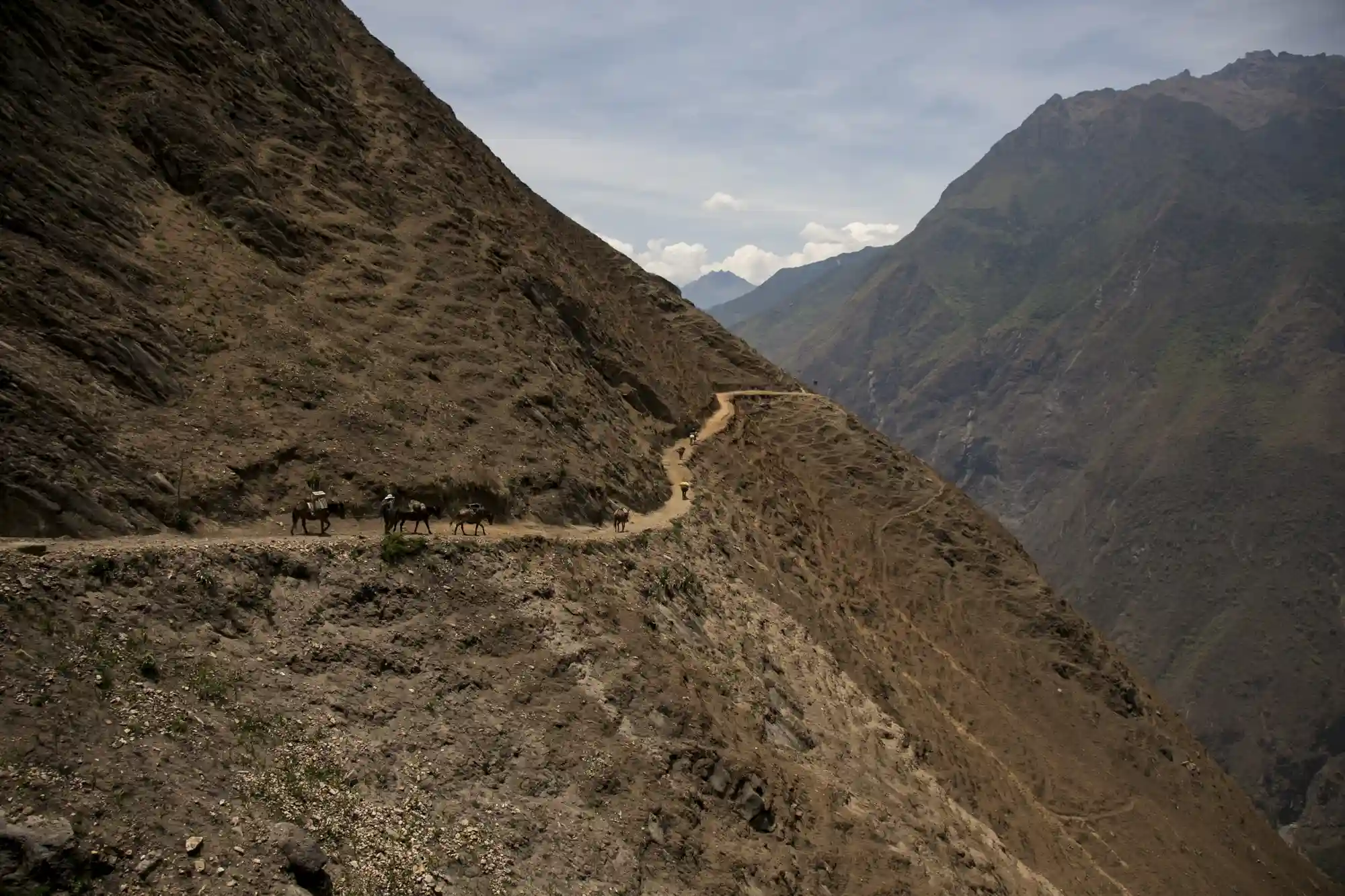
On foot, and only on foot. The journey starts with a drive of about three and a half hours from Cusco to Cachora, continuing to the trailhead at Capuliyoc. From there the trail drops steeply into the Apurímac Canyon and climbs the far side to reach the ruins.
There is no road, no cable car and no way to shorten it. That inaccessibility is precisely what has kept Choquequirao as quiet as it is. A cable car has been proposed for years but, as of 2026, nothing has been built.
What will I see at the site?
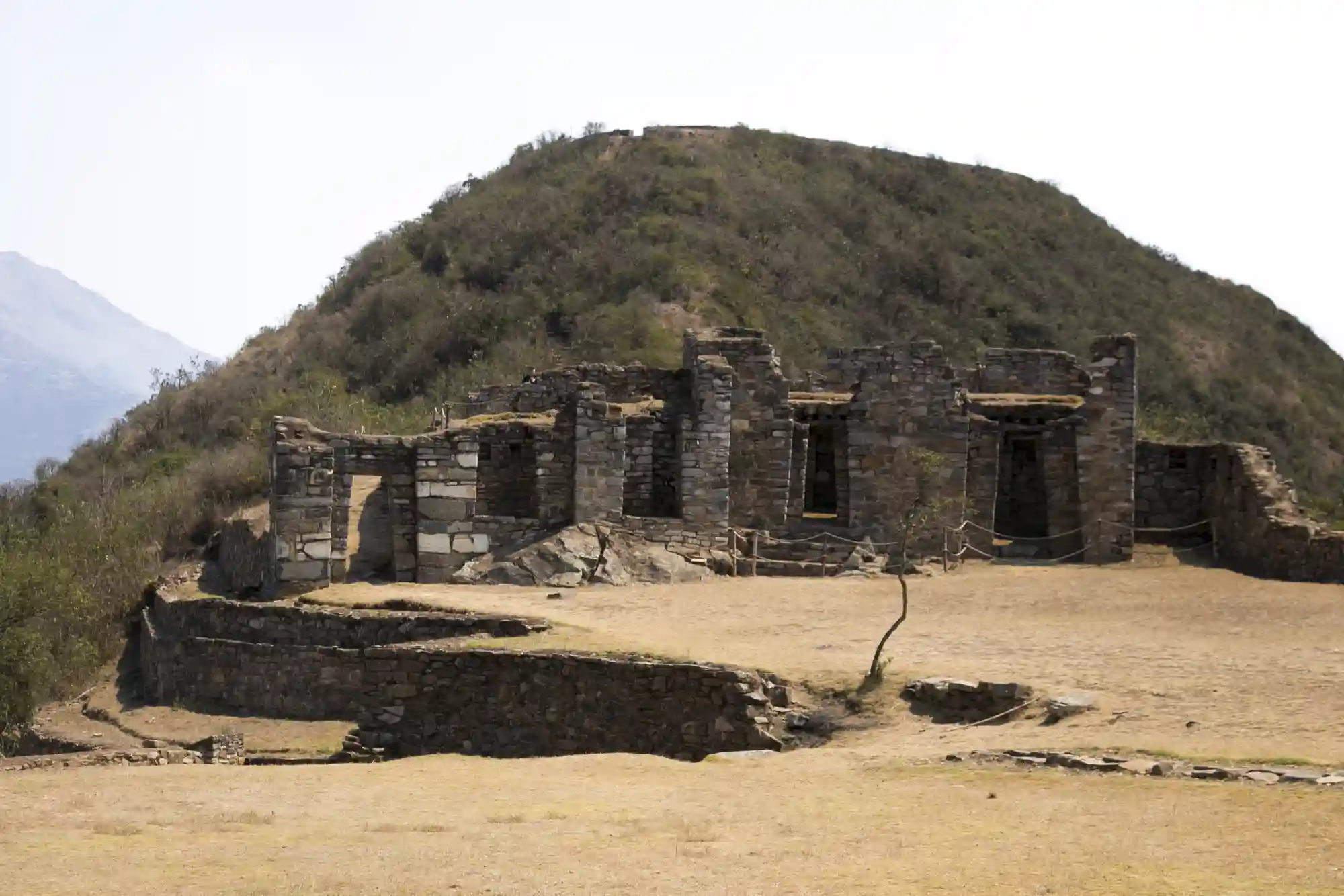
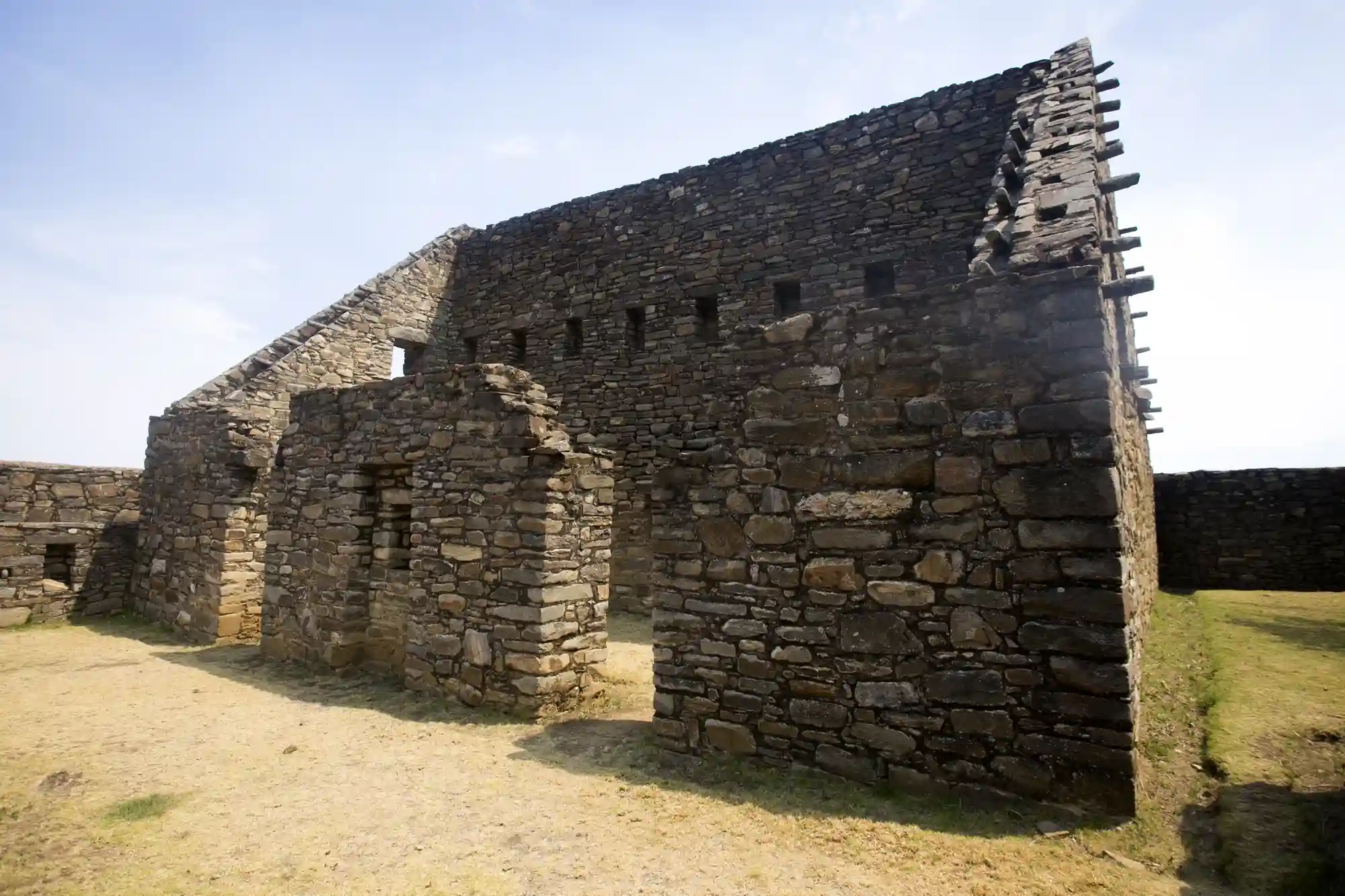
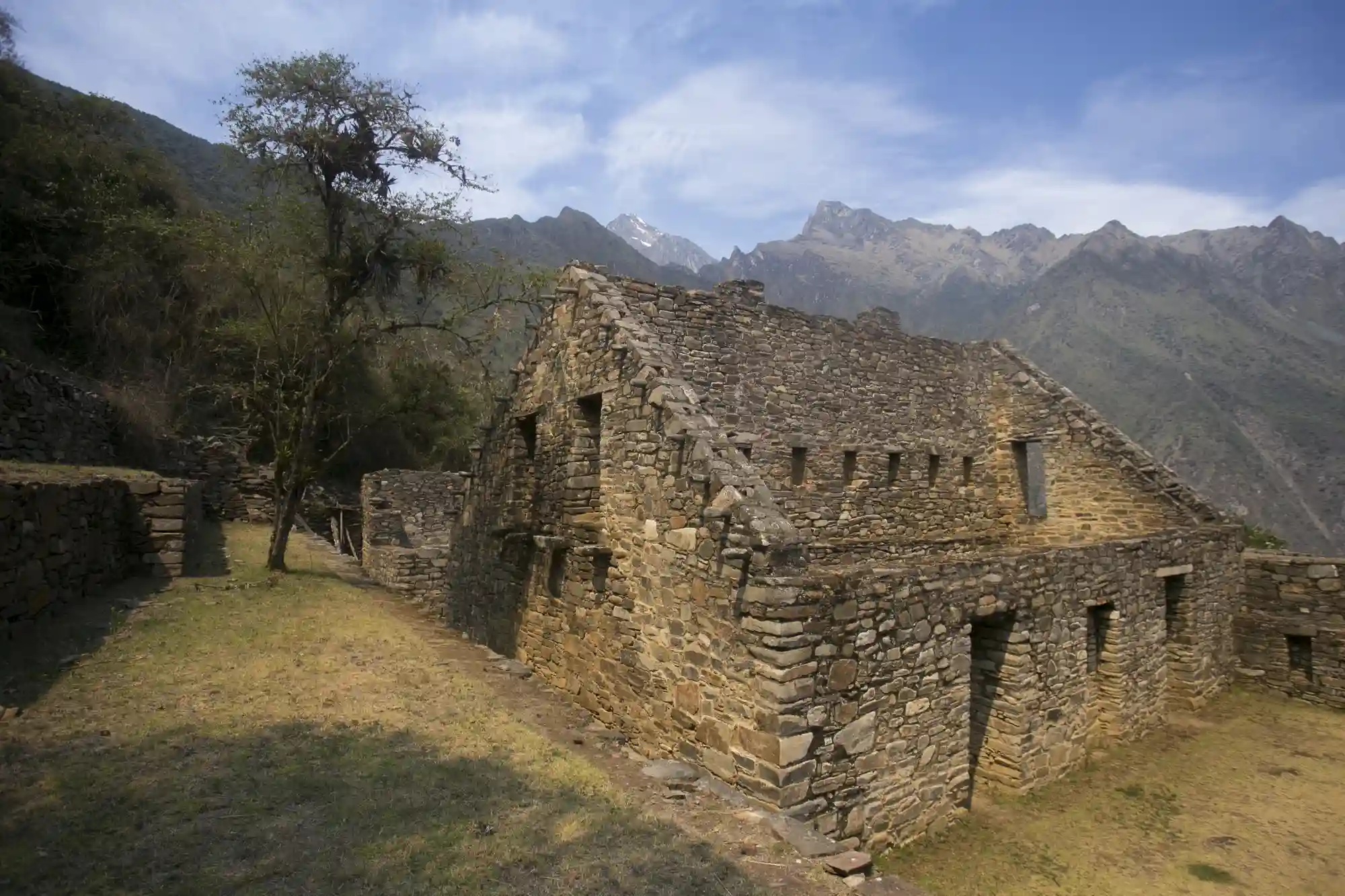
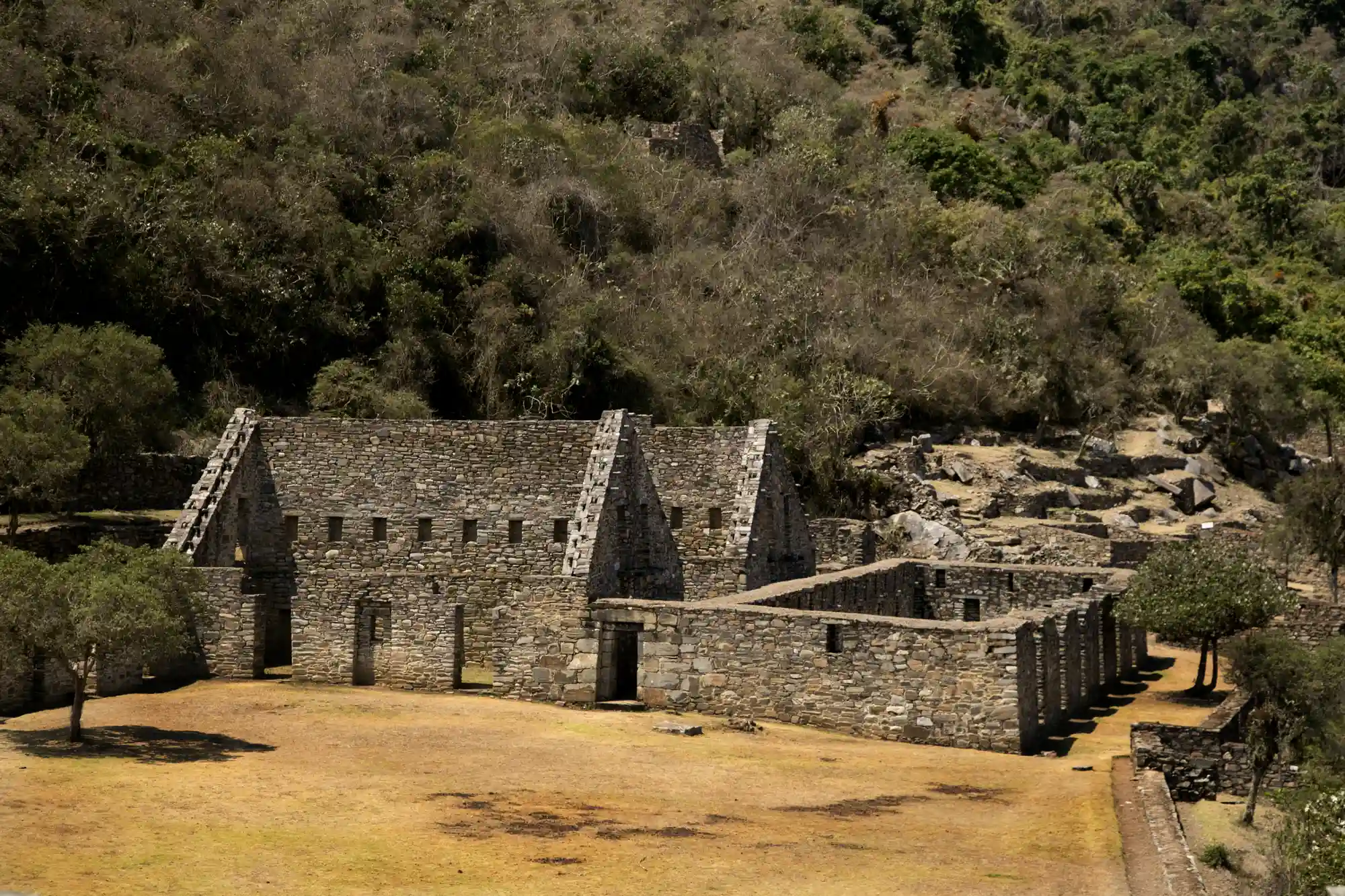
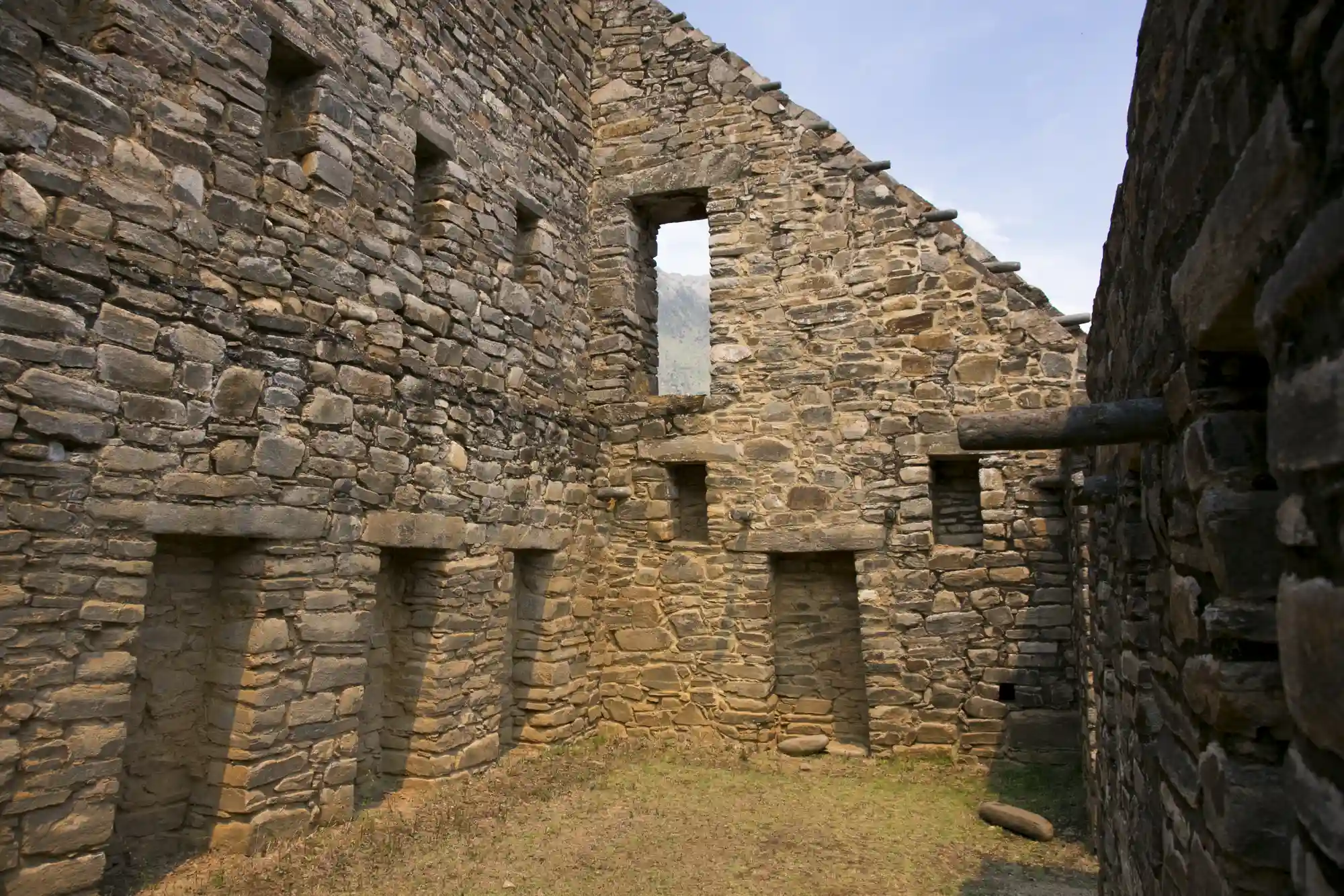
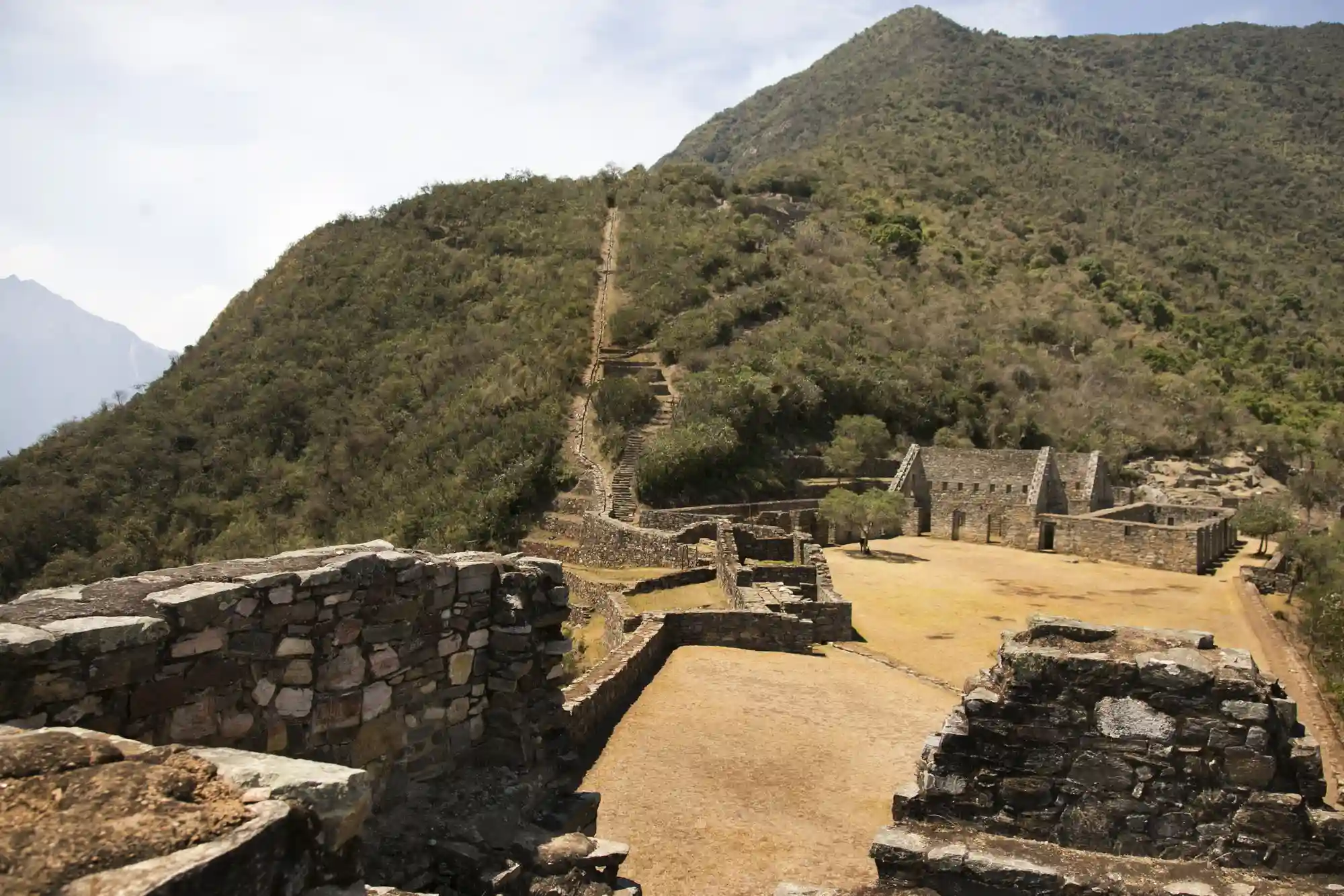
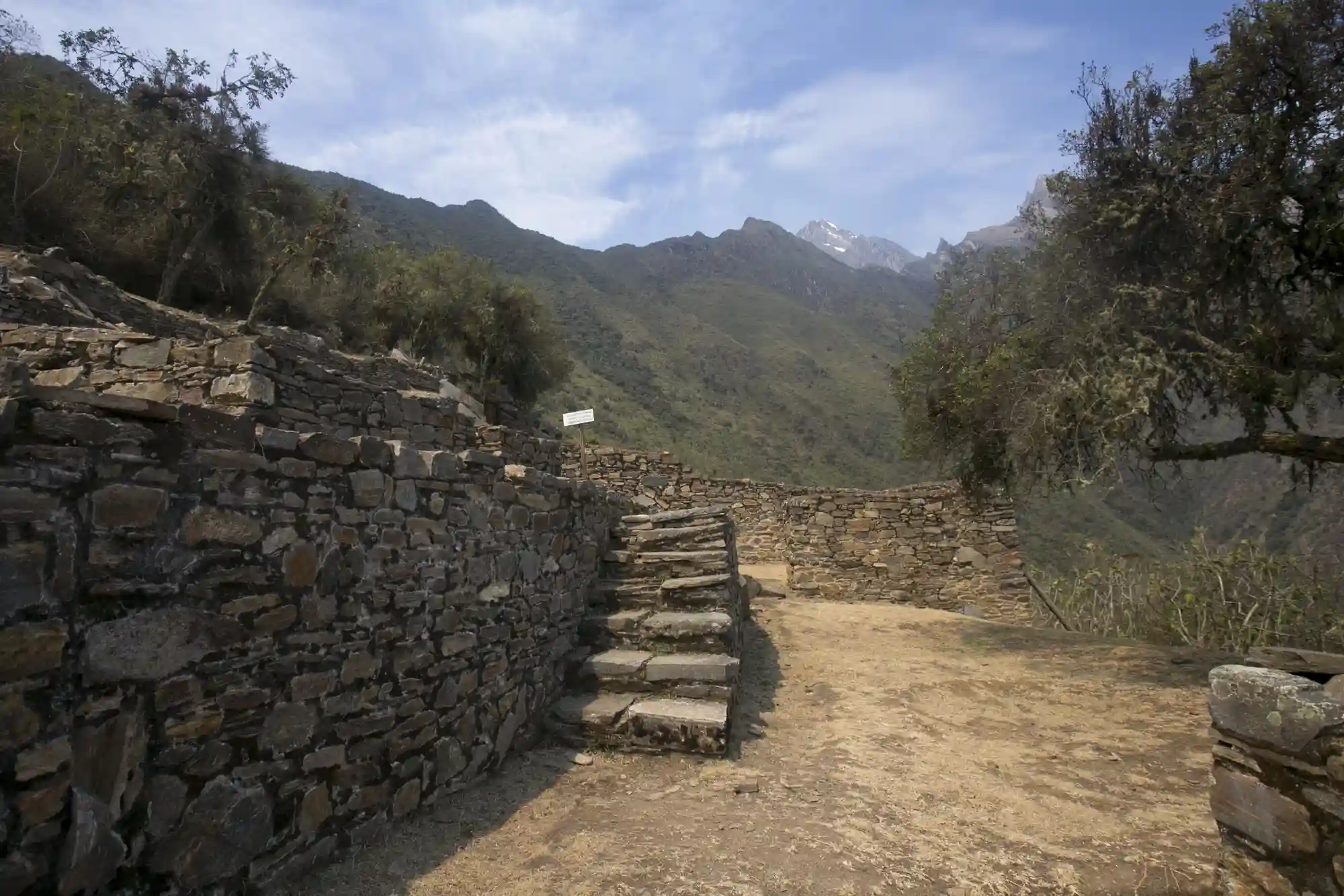
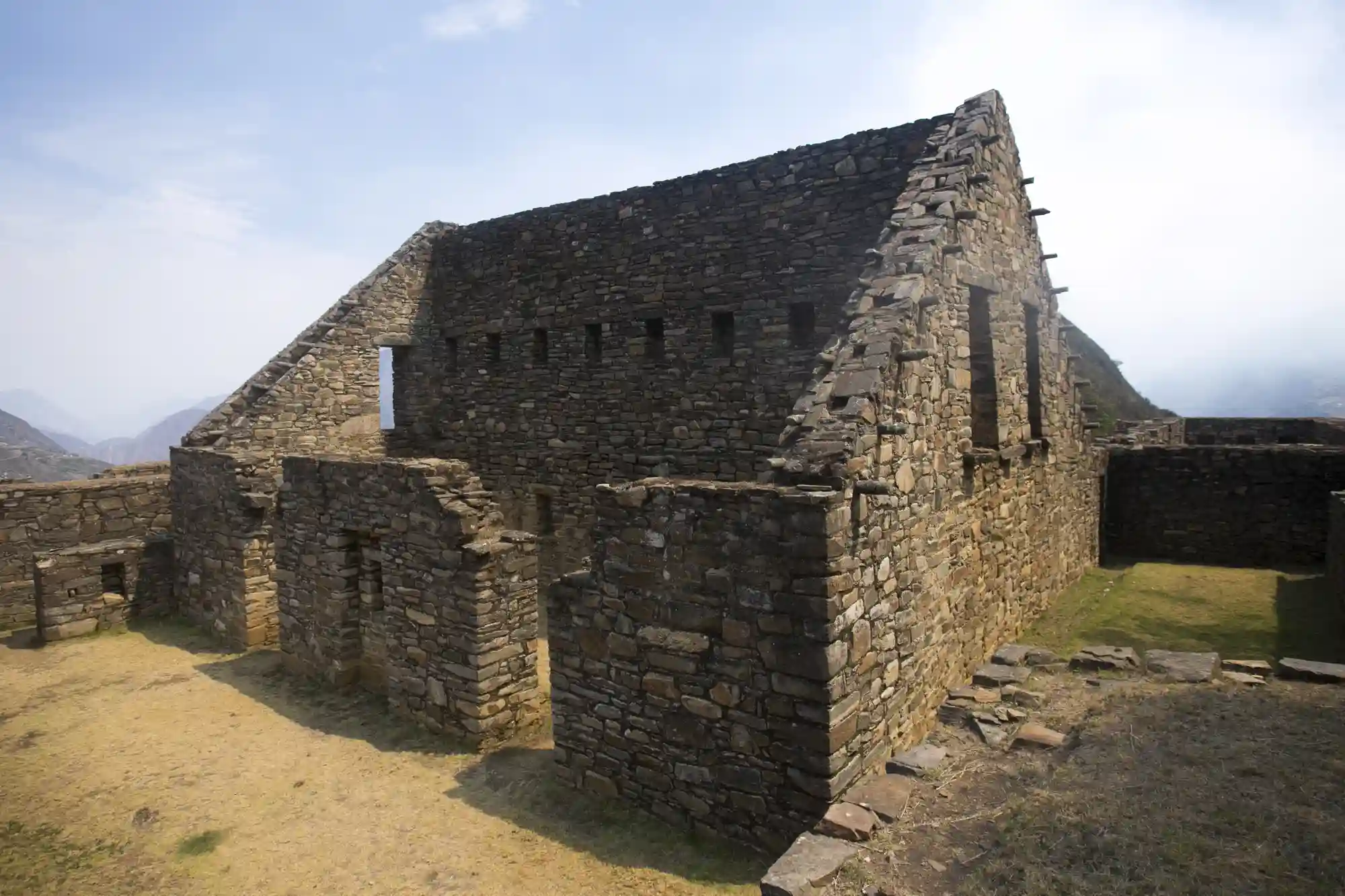
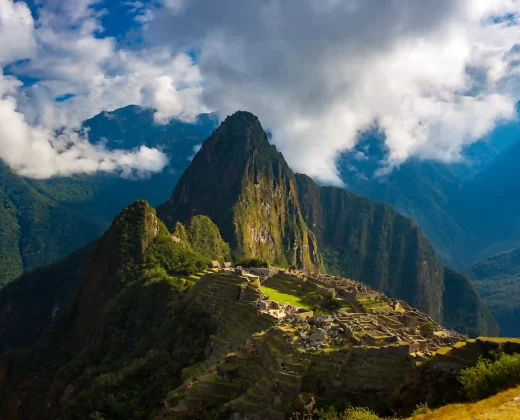
Choquequirao is an extensive citadel thought to have been a royal estate of the Inca Túpac Yupanqui. It spreads across more than 1,800 hectares, of which only around 40% has been excavated — you are walking through a site that is still largely under the forest.
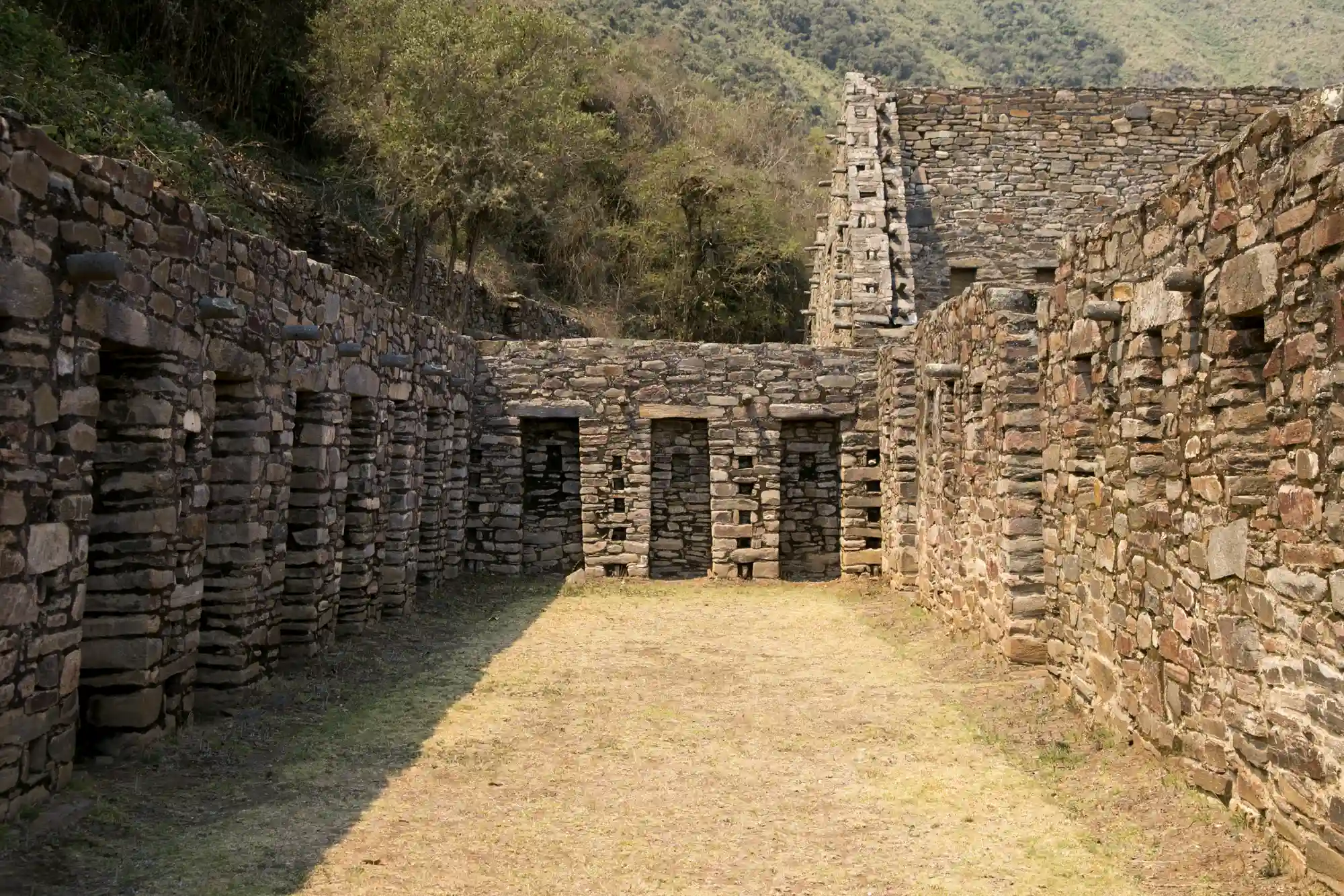
The highlights are the ceremonial plazas, the water channels, the residential terracing and the lower terraces with their white stone llamas, a decorative feature found nowhere else in the Inca world. The trek itself adds the Apurímac Canyon, stretches of cloud forest and the small Andean communities along the route.
What is included?
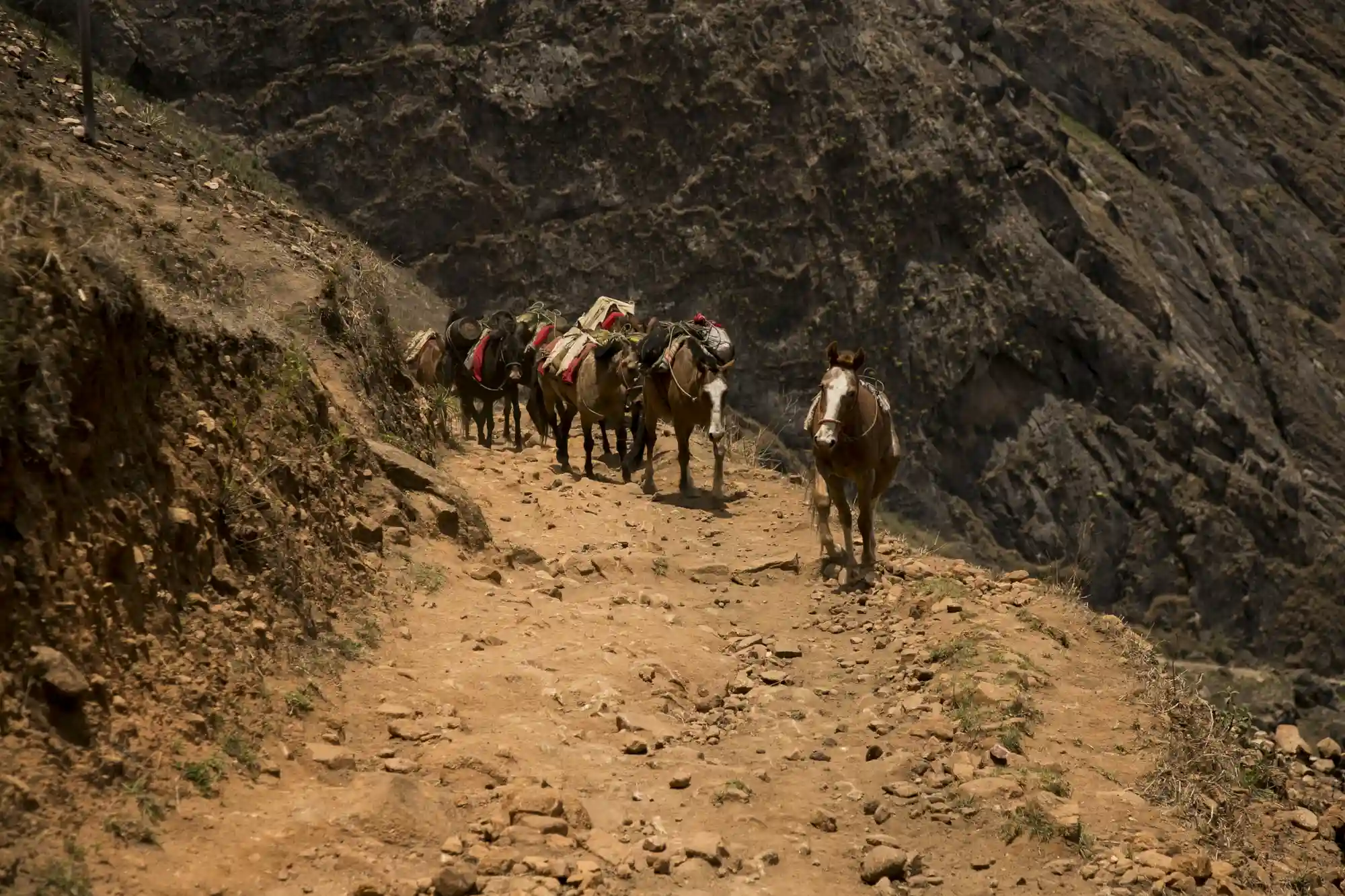
Round-trip private transport from Cusco, a professional bilingual guide, the cook and support team, pack horses carrying your duffel bag, three nights in local family-run guesthouses, entrance to the Choquequirao archaeological complex and to Saywite, and a first-aid kit with emergency oxygen.
Meals run from lunch on Day 1 to lunch on Day 4 — ten in total: three breakfasts, four lunches and three dinners.
Not included: drinking water, trekking poles (rentable from us), personal equipment and tips.
Do I need to bring a sleeping bag?
No. You sleep in guesthouses rather than tents on this itinerary, with beds and blankets provided, so there is no camping equipment for you to carry or rent — which is a considerable advantage on a route where everything goes down into a canyon and back up again.
Choquequirao Trek 4 Days — The Complete Travel Guide
Around thirty people a day reach Choquequirao. Machu Picchu takes thousands. The difference is not the quality of the ruins — it is that one has a train and the other has a canyon you have to walk down into and back out of.
This guide covers what that actually involves, so you can decide honestly whether the Choquequirao Trek 4 Days is your trek.
The canyon is the whole story
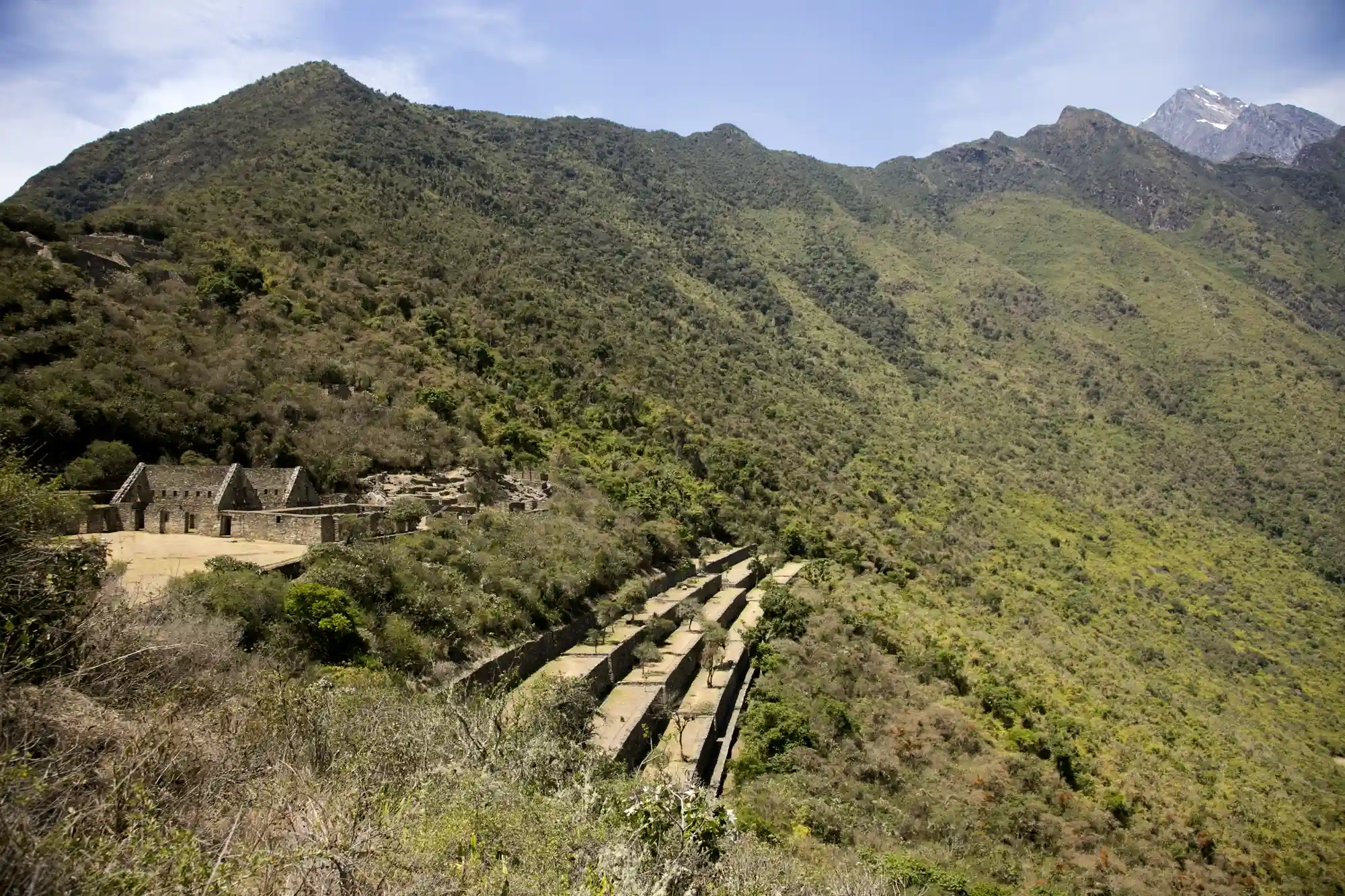
Every difficulty and every reward on this route comes from the same geography. Choquequirao sits on a ridge above the Apurímac Canyon, and the trail from Capuliyoc has to cross it.
That means descending from around 2,900 m to 1,200 m at the river, then climbing 1,650 m up the other side to Marampata. Then, on the way home, doing the whole thing in reverse. There is no way around it and no vehicle that can help.
The compensation is that the canyon is magnificent, that the trail is almost empty, and that when you finally walk into Choquequirao you may have the site largely to yourself.
How hard is it, really
Harder than the Inca Trail and harder than Salkantay. Not because of altitude — the highest point is under 3,100 m, so this is not a route where soroche is the enemy — but because of sustained steep ascent and descent in heat.
Day 2 climbs 1,650 m. Day 4 descends to the river and then climbs about 1,700 m back to Capuliyoc, and it takes seven to nine hours. Those two days are what people remember, in both senses.
The honest test: can you walk uphill for four hours, in the heat, on consecutive days, and then get up and do it again? If yes, you will love this trek. If you are unsure, Salkantay or the Inca Trail will serve you better.
Train for the descents, not just the climbs
Most people prepare by going uphill. On Choquequirao the descents do the damage: thousands of metres of steep, loose, dusty trail that hammers quadriceps and pushes toes into the front of your boots.
Practise walking downhill under control, and do it in the exact footwear you plan to bring. Trekking poles are close to compulsory here — we rent them for USD 10 if you do not have your own, and they will save your knees on Day 4.
Heat, not cold, is the problem
This trek runs opposite to expectations for the Cusco region. The canyon floor at 1,200 m is hot and dry, exposed for long stretches, and by midday the climb out of it is genuinely punishing.
That is why the itinerary starts early: the goal is to be through the lowest and most exposed sections before the sun is high. Carry more water than feels necessary, use sunscreen properly, and keep your head covered.
You sleep in beds, not tents
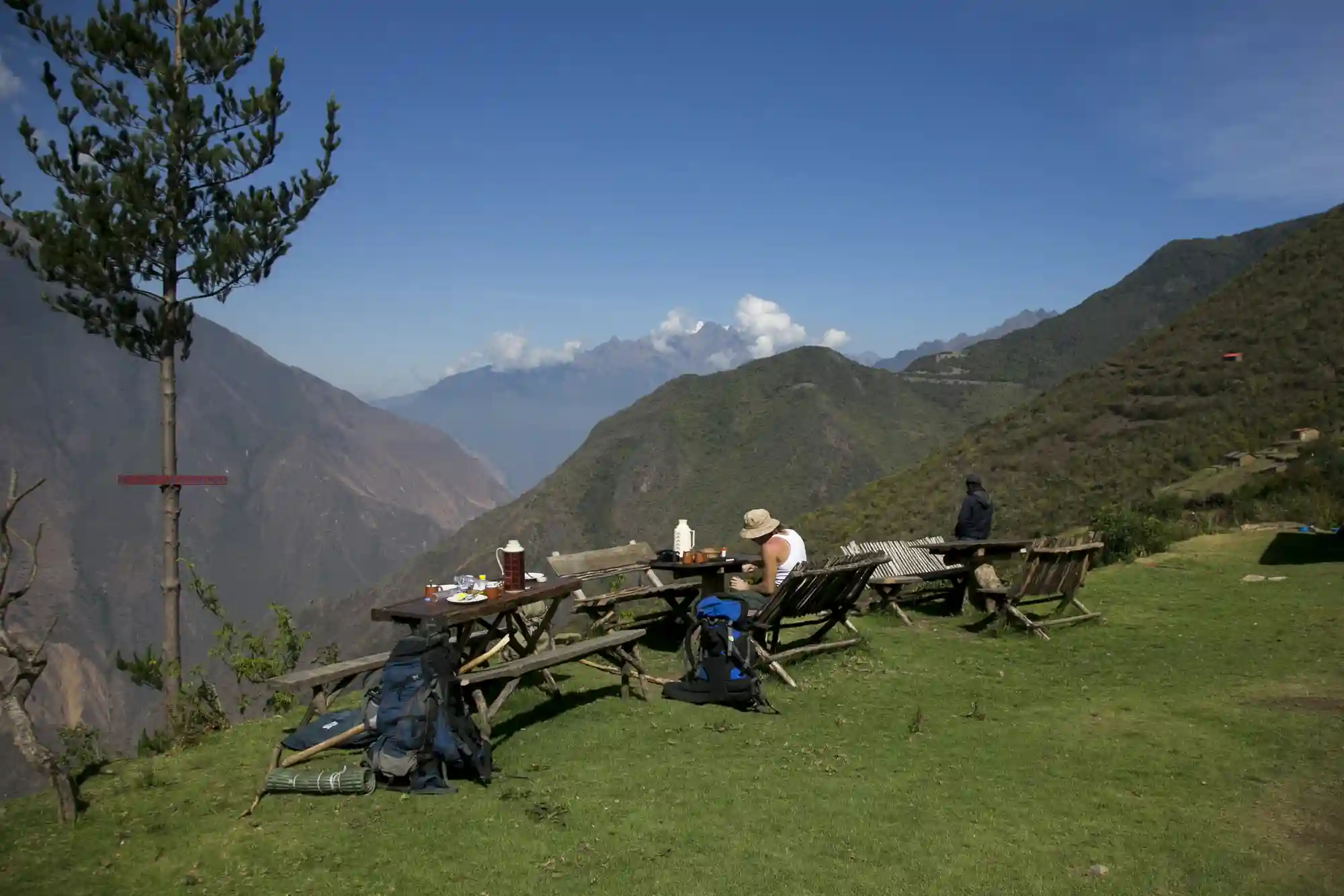
Worth knowing, because it changes what you pack. The nights are spent in family-run guesthouses at Chiquisca and Marampata, with beds and blankets provided. No sleeping bag, no tent, no mat to carry — which on a route where pack horses take everything up and down a canyon is a real advantage.
It also means you are staying with the families who live along this trail, and your money stays in the communities that maintain it.
When to go
The dry season, roughly April to October, is the sensible window: firmer trail, clearer views across the canyon, and less risk of the route being affected by landslides. June to August brings the coldest nights up at Marampata and the strongest sun down at the river.
The wet months turn the descents slippery and the canyon humid, and heavy rain can damage sections of trail. If your schedule has no flexibility, this is not the season to attempt it.
What to know about the site
Choquequirao is thought to have been a royal estate of Túpac Yupanqui, spread over more than 1,800 hectares of which only a fraction has been cleared. You are walking through a site still being reclaimed from the forest, which is part of why it feels so different from Machu Picchu.
The signature feature is the lower terraces, decorated with llamas picked out in white stone — nothing else like them survives anywhere in the Inca world. Reaching them means an additional descent and climb, so whether the group does it depends on time and how everyone is holding up.
Practical points
Attend the briefing at 6:00 p.m. the night before; it is where you collect your duffel bag and where the pick-up time is confirmed.
Bring cash in soles. Small family shops along the trail sell water and drinks roughly every three to four hours, and there is nowhere to use a card.
Get insurance that covers evacuation, and check that it does. Choquequirao is a long way from a road in every direction.
Finally, do not book a flight for the evening of Day 4. You finish walking at Capuliyoc, then drive four to five hours, arriving in Cusco around 10:00 p.m.