How to Book the Machu Picchu by Car 3 Days
Step 1 — Check Your Date
Hit BOOK NOW to open our live calendar and choose a departure date. What’s available depends on entrance tickets, transport, hotel rooms in Machu Picchu Pueblo, guides, and operating conditions on the ground. A date showing green isn’t locked in until our reservations team has verified every service and sent you written confirmation.
Step 2 — Traveller Count and Categories
Enter how many people are going and select the right category for each: adult, eligible student, child, or Andean Community citizen where that applies. Student rates require meeting the official criteria and sending a clear photo of both sides of a valid university card. At this point you choose between paying the USD 70 non-refundable deposit per person or settling the full amount.
Step 3 — Traveller Details
Fill in the form carefully for every participant: full name exactly as printed on the passport, passport number, nationality, date of birth, WhatsApp with country code, email, your Cusco hotel, dietary needs, any relevant medical conditions, and an emergency contact. Accuracy matters more here than anywhere else — each Machu Picchu ticket is issued to a named person for a specific date and cannot be reassigned afterwards.
Step 4 — Optional Extras
Subject to availability, you can add Huayna Picchu Mountain, Machu Picchu Mountain, a hotel upgrade, round-trip shuttle tickets up to the citadel, private transport, or other services. All carry an additional cost, and all should be requested as early as possible — mountain permits and upgraded rooms run out well ahead of the standard package.
Step 5 — Payment
Review everything, then continue to the secure payment platform. Debit and credit cards are accepted, with bank transfer available when arranged beforehand. Card payments made online carry a 3.99% processing fee. Your receipt arrives immediately; our team then confirms availability and sends your final confirmation, usually within 24 hours.
Booking in Person
You’re also welcome at our office: Portal Nuevo 270, Plaza Regocijo, one block off the Plaza de Armas. Our staff will check dates with you, talk through the circuit options, go over accommodation, add any extras, take your details, and process payment on the spot.
Terms and Conditions
Deposit and confirmation. A USD 70 non-refundable deposit per person starts the reservation. It goes primarily toward purchasing your official entrance ticket and securing the core services. Your booking is only fully confirmed once payment has cleared, every service has been verified, and our team has issued written confirmation.
Cancellations and refunds. The deposit cannot be returned, because it buys a non-refundable ticket and commits confirmed services. If you paid in full, we refund whatever is recoverable after deducting the deposit, tickets, hotel costs, transport, meals, optional services, processing fees, bank charges, currency conversion, and anything else we can’t get back.
Date changes. Moving your date depends on tickets, rooms, transport, guides, and extras being available. Since an issued Machu Picchu ticket generally can’t be changed or refunded, a fresh USD 70 deposit per person applies to the new date, along with any price difference, hotel penalty, or transport charge that results.
Names and passports. The name on your booking must match your passport exactly. Name changes and transfers to a different traveller aren’t normally permitted. If you renew or replace your passport after booking, tell us straight away — updating the number may be possible under official rules, and if the change is recent, carry both the old and new documents.
Remaining balance. Deposit-only bookings must be settled in full at least 24 hours before departure. Pay online, or in person at our office in US dollars, soles, or by card with the applicable fee. Unpaid balances may result in unconfirmed services being suspended or cancelled.
Circuit and entrance time. Both depend on official availability at the moment your reservation is processed. We aim for the most complete circuit on offer, but no specific route can be promised before the ticket is actually purchased. Whatever is secured appears clearly in your final confirmation.
Transport and the independent walk. Tourist transport between Cusco and Hidroeléctrica is included. The walks between Hidroeléctrica and Machu Picchu Pueblo are done without a guide: you’re responsible for following the directions we give you, keeping a reasonable pace, and reaching Hidroeléctrica before the return vehicle departs.
Accommodation. Two nights in Machu Picchu Pueblo are included, in the category stated in your reservation. Upgrades, hotel changes, and special arrangements depend on availability and may cost extra. Cancelling or modifying accommodation can trigger penalties under the hotel’s own terms.
Getting in touch. For changes, cancellations, passport updates, dietary requests, or anything else: machupicchureservations@gmail.com or WhatsApp +51 974 217 700. We’re available daily from 7:00 AM to 10:00 PM, and all modification or cancellation requests must come in writing.
Frequently Asked Questions — Machu Picchu by Car 3 Days
When’s the best time to visit Machu Picchu?
The site is open year-round, but May through September is the dry season and generally delivers clearer skies and better walking conditions — which matters here, since this itinerary involves two long stretches on foot along the railway. That window is also the busiest, so book well ahead. April and October are worth considering if you’d rather trade a slightly higher chance of rain for noticeably fewer people.
Do I need to book my entrance ticket in advance?
Yes, and the earlier the better. Tickets are capped daily and sell out, particularly in high season. Reserving the Machu Picchu by Car 3 Days early gives our team the best shot at securing a strong circuit and a convenient entry time for your date.
How long do I get inside the citadel?
Your ticket assigns you an official circuit, and that determines what you see. The guided portion typically runs two to two and a half hours, with the guide explaining as you go and time to photograph the site from the permitted viewpoints. Total visit length depends on your circuit and whatever rules the park has in force at the time.
What’s not allowed at Machu Picchu?
Movement follows a one-way circuit, and site staff instructions are non-negotiable. Restricted items include large backpacks, drones, tripods, and some professional camera equipment. Smoking and leaving litter are prohibited outright. Bring a small daypack with your passport, water, sun protection, rain gear, and nothing more.
Can I take photographs?
Yes — a phone or an ordinary camera is fine anywhere the circuit allows. Professional rigs, tripods, drones, and any shooting for commercial use need prior authorisation. Your guide will point out where the best permitted shots are as you move through the site.
Machu Picchu by Car: The Complete Travel Guide to the Hidroeléctrica Route
There are two ways to reach Machu Picchu. One involves a train and costs several hundred dollars. The other goes overland — around the mountains rather than through the Sacred Valley — and ends with a walk along the railway tracks into Aguas Calientes. The Machu Picchu by Car 3 Days takes the second route, and for a certain kind of traveller it’s not just the cheaper option. It’s the better one.
This guide covers how the route works, what it costs you in time and effort, and how to decide whether it’s right for you.
Why This Route Exists
Machu Picchu has no road access. The only vehicle route ends at Hidroeléctrica, a hydroelectric station in the valley below the citadel, and from there the last 11 kilometres to Aguas Calientes must be covered on foot or by train.
For decades the train from Ollantaytambo was effectively the only option, and PeruRail and IncaRail still price it accordingly. The overland route emerged as the traveller’s workaround: a long drive around the mountains to Hidroeléctrica, then a walk beside the tracks. What started as a backpacker improvisation is now a fully organised product, and it typically costs less than half what the train version does.
How the Route Actually Works
The drive. Six to seven hours from Cusco, and genuinely scenic rather than merely long. The road climbs out of the city into high Andean terrain, crosses the Abra Málaga pass at over 4,300 metres, then descends steeply through cloud forest into subtropical valley. You’ll feel the temperature change through the window. The final stretch to Hidroeléctrica is unpaved, narrow, and carved into the mountainside — spectacular if you like that sort of thing, unnerving if you don’t.
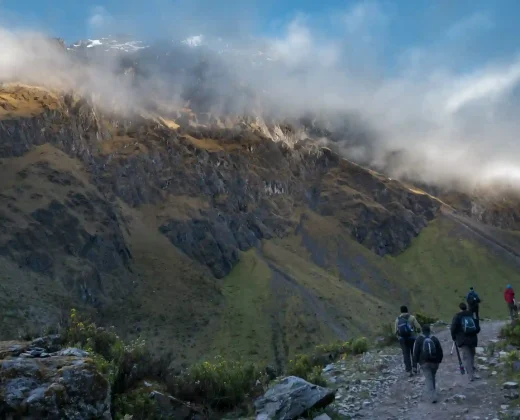
The walk. From Hidroeléctrica, roughly three hours and 11 kilometres beside the railway line, with the Vilcanota River below and jungle-covered slopes rising on both sides. The path is flat, well-worn, and impossible to lose — you follow the tracks. It’s warm, humid, and often buggy. Around halfway, Machu Picchu itself becomes briefly visible high above you on the ridge.
Aguas Calientes. A small town wedged into the gorge below the citadel, existing almost entirely to serve Machu Picchu visitors. It has hot springs, a busy artisan market, more restaurants than its size warrants, and a certain scruffy charm.
The citadel. Reached either by shuttle bus (25–30 minutes of switchbacks) or on foot (1.5–2 hours of steep stone stairs, starting around 4:00 AM if you want an early entrance).
Why Three Days Rather Than Two
The two-day version of this trip exists, and it’s punishing. You drive six hours, walk three hours, sleep, visit Machu Picchu, then walk and drive all the way back the same day. People arrive in Cusco near midnight having barely processed what they saw.
Three days changes the arithmetic entirely. Day 2 belongs to Machu Picchu alone — no return journey pressing on you, no watching the clock during the guided tour. You come back down to Aguas Calientes, have lunch, and spend a second night. The return happens on Day 3 with fresh legs.
This matters most if you’ve booked Huayna Picchu or Machu Picchu Mountain. Those climbs take two to three hours on top of the guided visit, and cramming them into a two-day itinerary is genuinely unpleasant.
Understanding the Circuit System
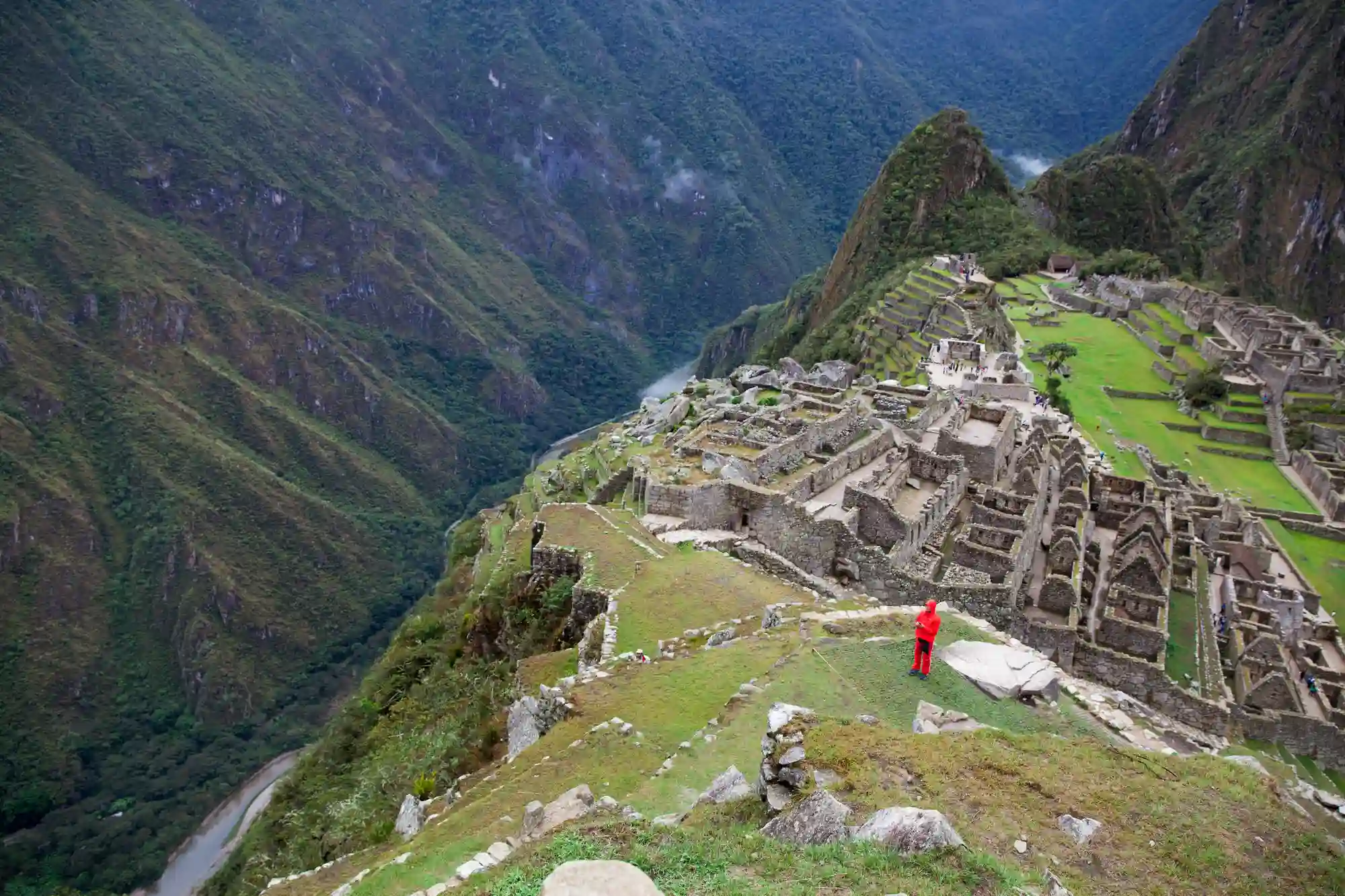
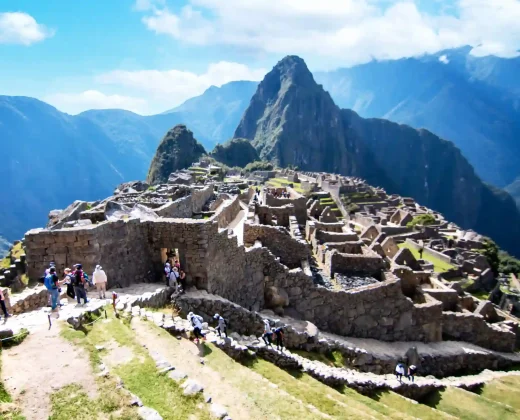
Since 2024, Machu Picchu operates under a system of numbered circuits and routes, and this is the single most consequential thing to understand before booking. Your ticket doesn’t grant access to the whole site — it grants access to one predetermined path through it.
Circuit 2 (Classic) is what most people picture when they think of Machu Picchu: the panoramic viewpoint plus a walk down through the citadel itself. Routes 2-A and 2-B both include the classic view.
Circuit 1 (Panoramic) gives you the upper terraces and the famous postcard angle, but does not descend into the ruins.
Circuit 3 (Royalty) covers the lower section and the residential quarters, but skips the classic viewpoint entirely.
If the photograph you have in your head is the classic one, you want Circuit 2. Tickets are sold exclusively by Peru’s Ministry of Culture and the good circuits disappear first, which is why booking four months ahead is the standard advice rather than an upsell.
When to Go
May to September is the dry season and the safest bet. It matters more on this route than on the train version, because you’re walking 22 kilometres in total and rain turns the railway path into a slog. June through August brings the clearest skies and the biggest crowds.
April and October sit in the shoulder — greener landscape, thinner crowds, generally acceptable weather, and better ticket availability.
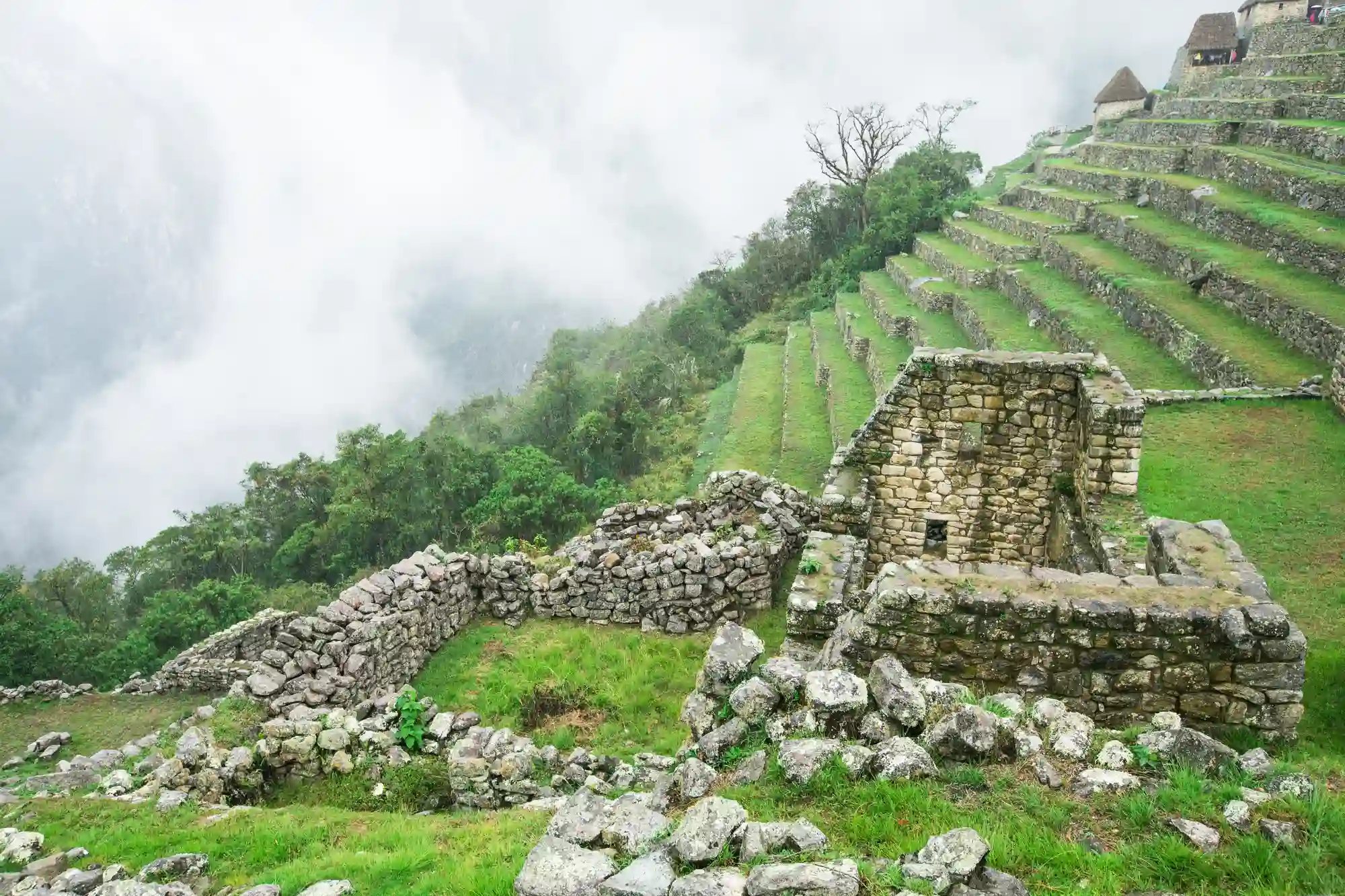
November to March is the wet season. The walk becomes muddy, cloud frequently obscures the citadel, and landslides occasionally close the road to Hidroeléctrica. February is the riskiest month; the Inca Trail closes entirely for maintenance, and while this route stays open, conditions are at their worst.
What This Trip Asks of You
Be honest with yourself about three things.
The driving. Twelve to fourteen hours in a vehicle across two days, on mountain roads with switchbacks. If you’re prone to motion sickness, medicate before departure rather than after.
The walking. Six hours total, flat but humid, in heat that surprises people arriving from cold Cusco. No technical difficulty whatsoever — but 22 kilometres in unbroken shoes will ruin your trip.
The altitude. Counterintuitively, this route is easier on your body than most Cusco excursions. Aguas Calientes sits at around 2,040 metres and Machu Picchu at 2,430 — both well below Cusco’s 3,400. You’ll likely sleep better and breathe easier than you have all week. Still acclimatise in Cusco first, though: the drive crosses passes above 4,000 metres.
Practical Advice
- Carry cash in soles. Aguas Calientes has ATMs, but they run dry and charge heavily. Bring what you need.
- Buy the bus ticket in advance if you want it. The shuttle up to the citadel isn’t included in most packages, and the queue at 5:00 AM is long.
- Insect repellent is not optional. The valley near Hidroeléctrica has sandflies, and their bites itch for days.
- Bring your original passport. Not a copy, not a photo. It’s checked at the entrance and there’s no discretion about it.
- Pack light and store the rest. Most operators hold your main luggage in Cusco for free. You’re walking 11 kilometres — take a daypack and nothing more.
- Keep an eye on the clock on Day 3. Return transport from Hidroeléctrica leaves on a fixed schedule and doesn’t wait for stragglers. Start the walk by 9:30 AM.
Is This the Right Way for You?
- Take the car route if budget matters, you’re comfortable with long travel days, you’re reasonably mobile, and the idea of walking into Machu Picchu appeals more than gliding in on a train.
- Take the train instead if you have limited time, mobility issues, small children, or you’d simply rather spend the money and arrive rested. There’s no shame in it — the Vistadome is a lovely ride and the Sacred Valley scenery is superb.
- Take the Inca Trail if what you want is the multi-day trek and the Sun Gate arrival, and you’ve booked six months ahead for a permit.
The Machu Picchu Tour by Car 3 Days occupies a specific niche: the most affordable route to the citadel that still gives you a full, unhurried day at the site itself. For travellers who want the wonder without the premium, that combination is difficult to beat.